
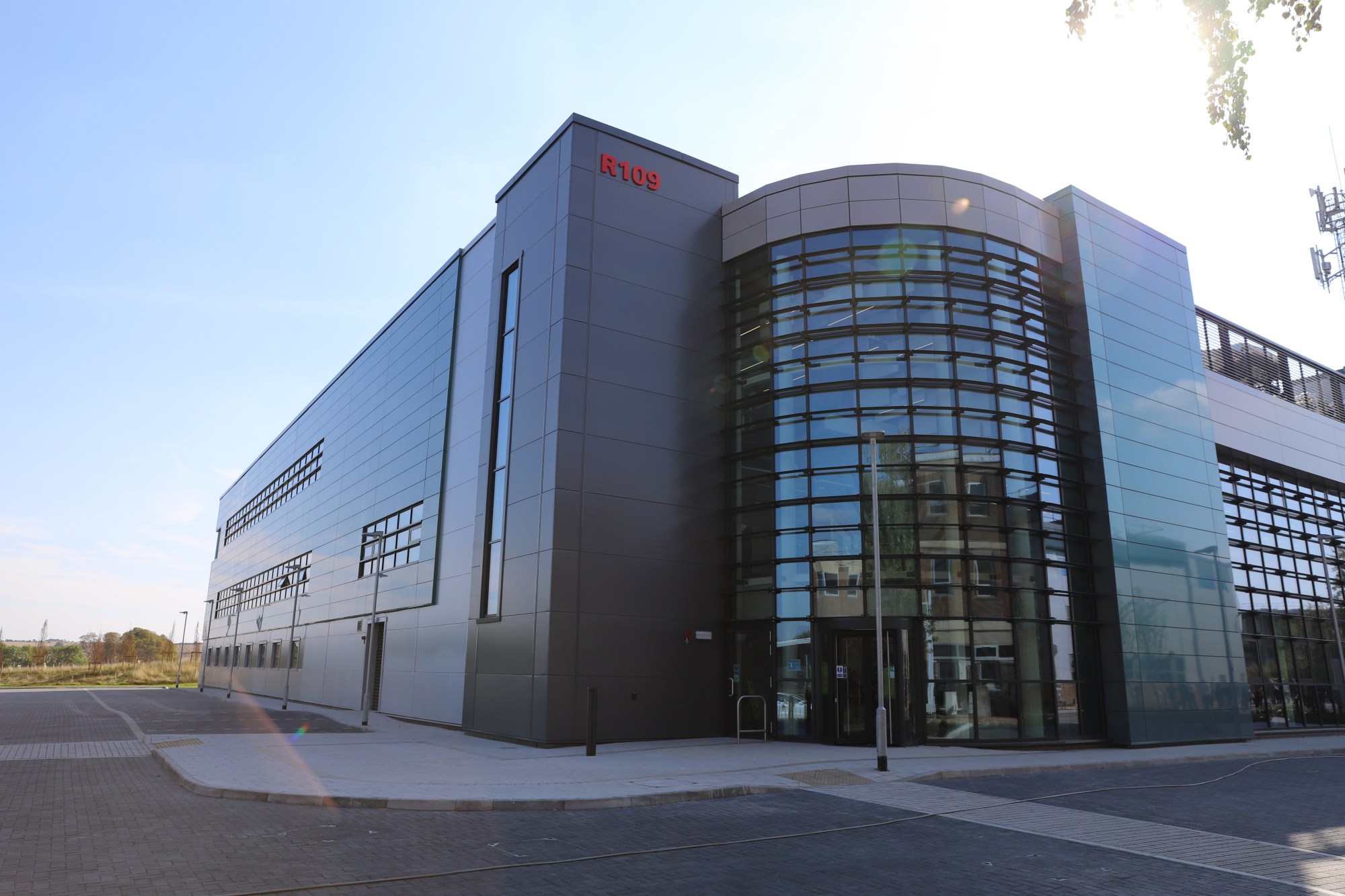
Laser technology will take a big step forward when the Extreme Photonics Applications Centre (EPAC), being built by the Science and Technology Facilities Council (STFC) Central Laser Facility (CLF) at the Rutherford Appleton Laboratory, comes on-stream in a few years’ time.
EPAC will be a groundbreaking international facility that will apply laser-driven plasma accelerators to a multitude of areas. It will expand the pioneering work of 2018 Physics Nobel Prize-winners Donna Strickland and Gérard Mourou, whose work in developing high-intensity, ultrashort pulses of light beams has already transformed several sectors.
The vision behind the centre at Harwell is to create an ecosystem that brings academia, defence & security, industry and manufacturing together, providing new capabilities for fundamental science and applications from across a wide spectrum of sciences and industry.
At the heart of EPAC is a laser producing 10,000 times more power than the whole of the UK national grid, albeit for a hundred-trillionth of a second. Focusing this to a spot that is smaller than the width of a human hair on a target will create temperatures hotter than the sun’s core.
Observatory Sciences’ involvement with EPAC has started with the Data Acquisition Systems – helping to review current designs and software architecture as well as IT infrastructure to support experiments and data management. This consultancy work enables the sharing of knowledge and experience on these topics from other large scientific facilities like Diamond Light Source and the Square Kilometre Array.
Observatory Sciences has developed a demonstration of a pulsed laser tomography experiment data acquisition system using EPICS software and the BlueSky data acquisition framework. Additionally an EPICS training course was delivered for STFC Central Laser Facility staff.