Extreme Photonics Applications Centre (EPAC)

Laser technology will take a big step forward when the Extreme Photonics Applications Centre (EPAC), being built by the Science and Technology Facilities Council (STFC) Central Laser Facility (CLF) at the Rutherford Appleton Laboratory, comes on-stream in a few years’ time. EPAC will be a groundbreaking international facility that will apply laser-driven plasma accelerators to …

CHIMERA

A fusion equipment testing facility, known as CHIMERA, being built by the UKAEA (United Kingdom Atomic Energy Authority) in Rotherham, Yorkshire will use EPICS control software developed by Observatory Sciences Ltd (OSL). Construction of the testing facility is being undertaken by global technical services company Jacobs, which has selected Observatory Sciences, to produce the SCADA …

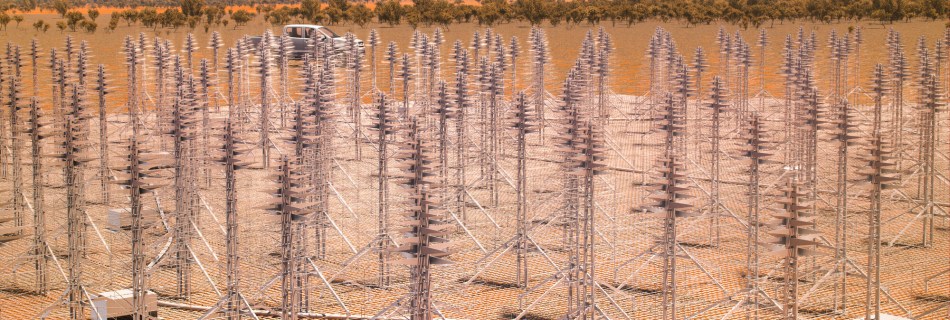
Square Kilometre Array Observatory (SKAO)

The SKAO, established in January 2021, is the world’s second intergovernmental organisation to be dedicated to astronomy. Headquartered in the UK on the grounds of the Jodrell Bank UNESCO World Heritage Site with sites in Australia and South Africa, the SKAO is tasked with building and operating the two largest and most complex radio telescope …

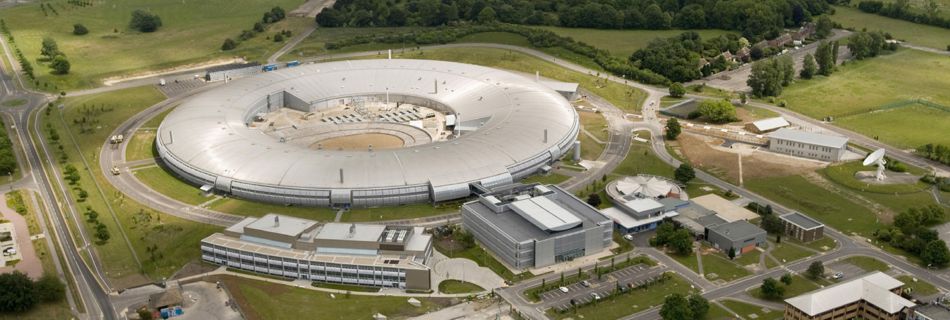
High-speed Detectors at Diamond Light Source

OSL consultant Alan Greer is working at Diamond Light Source (DLS) in Oxfordshire UK to provide data acquisition and control software for new, high-performance detectors being developed along with collaborating institutions. The software is being developed using a data acquisition framework called Odin. Odin will become an integral part of beamline controls at DLS, providing …

Cryogenic Instrument for Hawaii

CryoNIRSP, the Cryogenic Infra-red Spectropolarimeter, will be one of the first-light instruments on the DKIST (Daniel K Inouye Solar Telescope) currently under construction in Maui, Hawaii. In September 2018, Observatory Sciences consultants Becky Williams and Alan Greer visited the University of Hawaii Institute for Astronomy to integrate our control system software with the CryoNIRSP instrument …